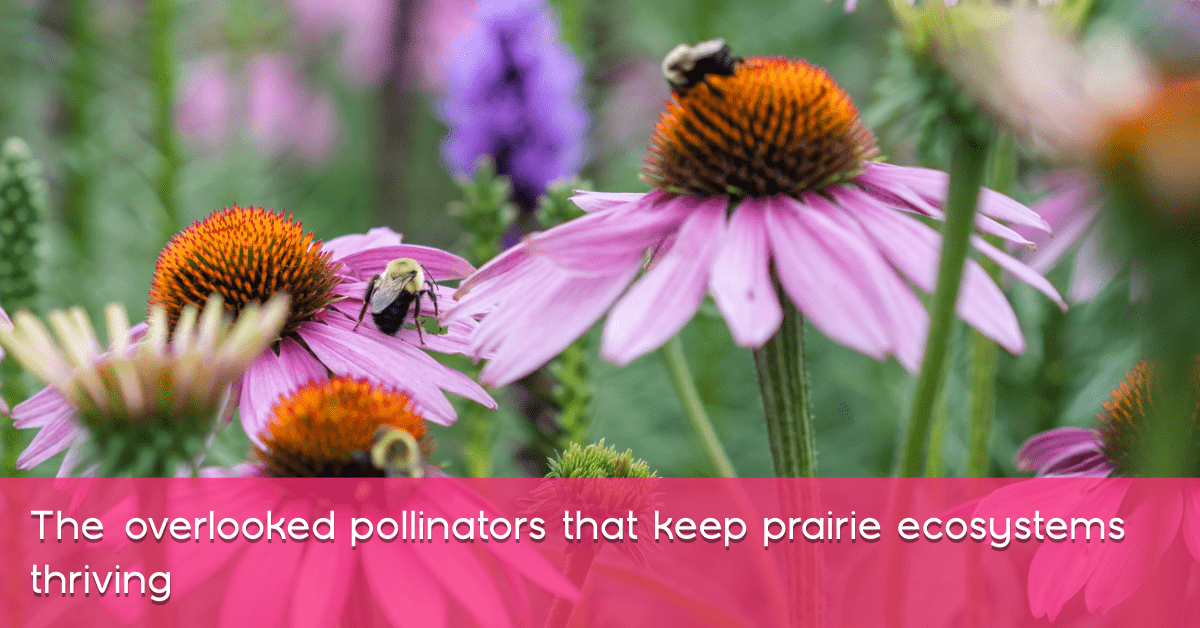
When people talk about pollinators, honeybees are usually the first insects that come to mind. Honeybees are certainly important, but spending time in my pollinator garden here in Lincoln, Nebraska has shown me that they are only one small part of the pollinator story.
Across North America there are more than 4,000 species of native bees, many of which quietly live in prairies, gardens, and natural areas throughout the Midwest. These bees have been pollinating native plants across the Great Plains for thousands of years.
Once I started paying closer attention to the flowers in my garden, I began noticing that the majority of the bees visiting them were not honeybees at all. Some were tiny metallic green bees darting quickly between blooms. Others were fuzzy bumblebees slowly moving through coneflowers and bee balm. Some were so small they were easy to overlook unless I watched carefully.
Over time, these bees have become some of my favorite garden visitors. They appear throughout the growing season, quietly doing the work that keeps prairie plants reproducing and ecosystems functioning.
The Diversity of Native Bees
Native bees come in an incredible range of sizes, colors, and behaviors. Unlike honeybees, which live in large colonies, most native bees are solitary. Each female bee builds and maintains her own nest, gathers pollen, and provisions the chambers where her offspring will develop. Many of these solitary bees visit flowers in my garden regularly.
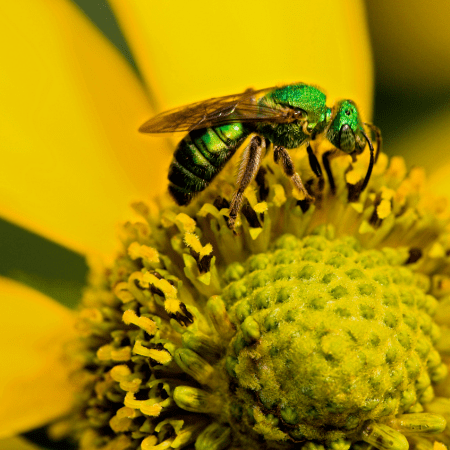

One of the most common visitors is the metallic green sweat bee. These small bees have bright green bodies that almost shimmer in sunlight. They move quickly between flowers, often visiting black-eyed Susans and coneflowers throughout the summer.
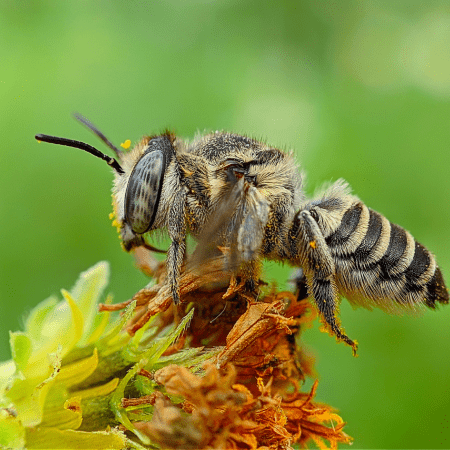
Another frequent visitor is the leafcutter bee. These bees are slightly larger and easy to recognize because they cut neat circular pieces from leaves to build their nests. Occasionally I notice small round cutouts on garden leaves, which is a sign that leafcutter bees are active nearby.
Mining bees also appear in early spring. These bees emerge when the first flowers begin blooming and often nest in the soil. Watching them hover close to the ground near patches of bare soil is usually a clue that they have nesting tunnels nearby.

How Native Bees Pollinate
Native bees are remarkably efficient pollinators. While honeybees often focus on collecting nectar and pollen for their colony, solitary bees gather pollen specifically to feed their developing larvae. This means they carry large amounts of pollen between flowers. Some native bees even use a behavior called buzz pollination, where the bee vibrates its body while clinging to a flower. This vibration helps release pollen that would otherwise remain trapped inside the plant.
Watching bees work among the flowers in my garden makes this process surprisingly visible. A bee may land briefly on a bloom, gather pollen, and then move quickly to the next flower. Within a few minutes it may visit dozens of blossoms. These quick visits help transfer pollen between plants, allowing prairie flowers to reproduce and set seed.
Where Native Bees Live
One of the most surprising things I learned about native bees is where they live. Unlike honeybees that build visible hives, many native bees nest underground. They dig small tunnels into the soil where they create chambers for their eggs. Each chamber is stocked with pollen and nectar before the egg is laid. Because of this behavior, leaving small patches of bare soil in the garden can actually benefit native bees.
Other species prefer hollow plant stems or natural cavities in wood. This is one reason I leave some flower stems standing through winter instead of cutting everything down in the fall. Over time, these small habitat choices have made my garden a much more welcoming place for pollinators.

Supporting Native Bees in Gardens
Native bees thrive in gardens that provide both flowers and nesting habitat. Planting native prairie flowers is one of the most effective ways to support them. Flowers such as coneflowers, bee balm, blazing star, milkweed, and asters provide nectar and pollen throughout the growing season. Bloom diversity is especially important. Bees are active from early spring through fall, so having flowers available across the entire season helps sustain them.
Avoiding pesticides is another important step. Many chemicals designed to control garden pests can unintentionally harm pollinators. Even small gardens can make a meaningful difference. Over the years I have watched my own garden gradually attract more bees as the number of native plants increased. What began as a few flowers has become a small but active pollinator habitat.