The first cool nights of fall arrived this week, just after the equinox, and the garden noticed before I did. The air has a different smell in the morning now, and the light comes in lower and softer across the beds. Summer isn’t quite gone, but it’s clearly on its way out.
Monarchs on the move
The biggest story in my garden right now is the monarchs. On most days I count more than 30 of them, drifting between the flowers, resting on the grasses and fueling up before they move on. My garden was created specifically as a Monarch Waystation, with milkweed for caterpillars and plenty of nectar for adults, and this is the time of year when that work feels most worthwhile.
September is the peak of the fall migration through Nebraska. The monarchs passing through now are a special generation. Summer monarchs live only a few weeks, but these fall travelers can live for eight months or more. They are on their way to the mountain forests of central Mexico, a journey that can stretch close to 3,000 miles, where they’ll spend the winter clustered together in the fir trees.
To make that trip, they need fuel. Every stop along the way is a chance to drink nectar and build up the fat reserves that carry them through the flight and the long winter. In my garden, they spend most of their time on the late bloomers: New England aster, smooth blue aster, stiff goldenrod, Maximilian sunflower and rough blazing star, all native to this part of the Great Plains. A garden full of late-season flowers works like a roadside rest stop, and watching dozens of monarchs move through mine each day is a good reminder that even a city yard can matter to a migration that spans a continent.
Dew, webs and seeds
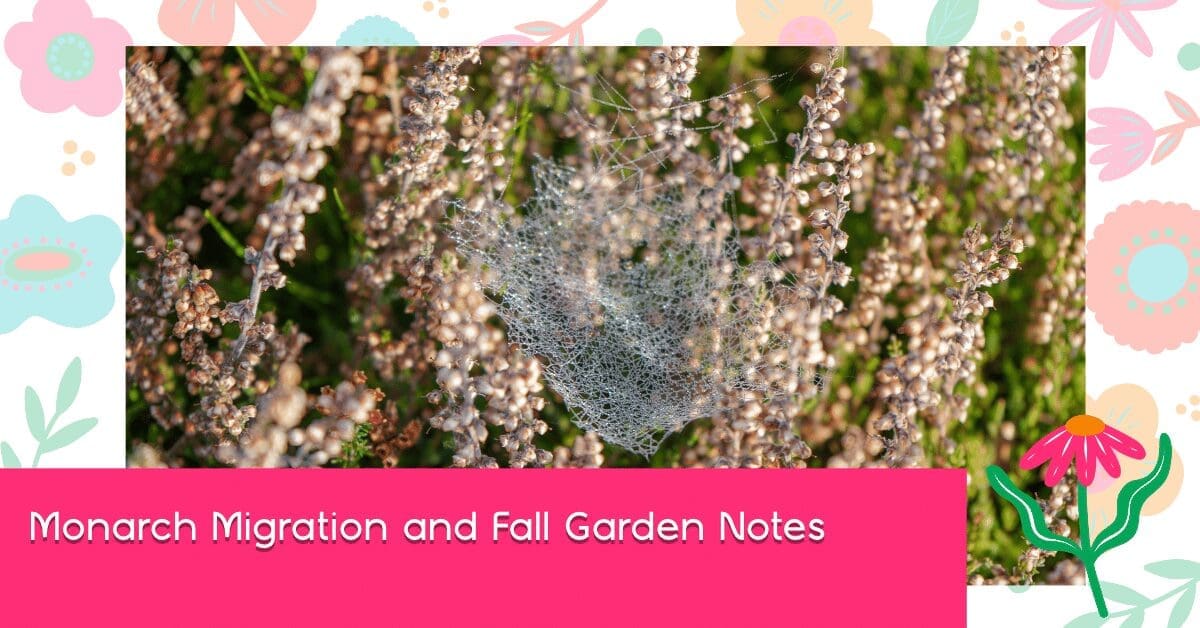
Mornings start with heavy dew now. It shows off the orb webs that garden spiders have been building all summer, strung between the grasses and the seed heads. By late September the spiders are full grown, and their webs are at their largest. On a still morning, with the sun coming through the dew, the whole garden looks like it’s been strung with lace.
The milkweed pods are splitting open, too. The silky seeds lift out on the breeze, each one riding its own little parachute. I leave most of them to scatter on their own, so new milkweed can take root wherever it lands.
The grasses begin to turn
The prairie grasses are starting to yellow. The deep green of summer is giving way, a little more each day, to pale gold at the tips and along the blades. Over the next few weeks, those first touches of yellow will deepen into the bronze, rust and copper tones that make the prairie so beautiful in late fall. For now, the change is subtle, and you have to look for it. That’s one of my favorite things about this time of year.
A quieter pace
The garden is slowing down, but it is not finished. The bees are still busy on the last flowers, the birds are working through the seed heads, and the monarchs keep arriving. There is still plenty happening, just at a quieter, cooler pace.
Life in the prairie garden shifts quietly with the seasons, and I try to take time to notice those changes as they happen. These small moments continue to shape the inspiration behind Pixel Prairie Co.