Mid-August is one of the busiest times of year in my garden, but much of the activity is easy to miss. You have to look closely, and usually you have to look underneath.
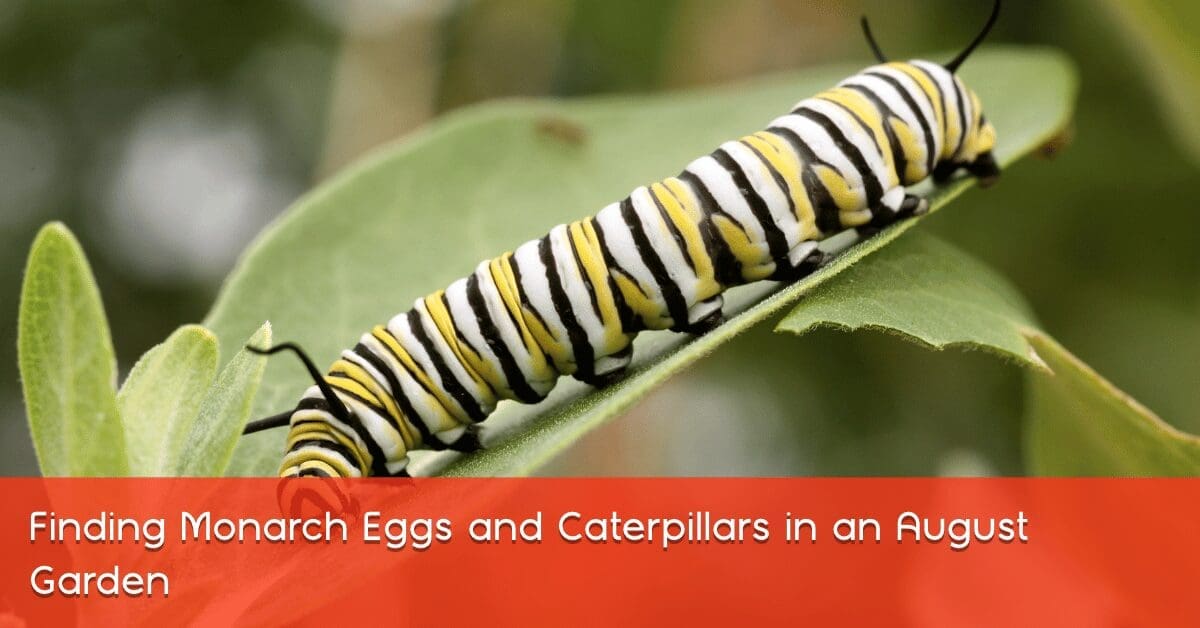
The milkweed patches in my garden are a nursery right now. Turn over a leaf and you might find a tiny egg the size of a pinhead. Look a little lower and there may be a striped caterpillar working its way through a leaf, or, if you’re lucky, a jade-green chrysalis hanging from a nearby stem. My garden was created specifically as a Monarch Waystation, and this is the part of the season that shows why milkweed matters so much.
Why August is special
Monarchs raise several generations over the course of a summer. The butterflies born in early and midsummer live only a few weeks. They mate, lay eggs and continue the cycle.
But the eggs laid in late summer are different. As the days get shorter, the nights cool and the milkweed starts to age, the monarchs that develop from these eggs grow into a special generation. Instead of breeding right away, they put their energy into flight. These are the butterflies that will migrate thousands of miles to the mountain forests of central Mexico this fall, and some of them will start that journey from a milkweed patch in a Lincoln backyard.
That means every egg and caterpillar in an August garden has a big job ahead of it.
How to find monarch eggs
Monarch eggs are tiny, about the size of a pinhead, and creamy white to pale yellow. They’re shaped a little like a football standing on end, with fine ridges running from top to bottom if you look closely.
Female monarchs usually lay one egg at a time, most often on the underside of a young, tender milkweed leaf near the top of the plant. To find them:
- Check the newest leaves first, near the top of each stem.
- Gently turn leaves over rather than pulling them off.
- Look in the morning or evening, when the light is soft and the eggs stand out against the green.
- Watch for a female monarch hovering and touching down briefly on leaves. She’s often laying eggs as she goes.
An egg hatches in about three to five days.
Watching the caterpillars grow
A newly hatched caterpillar is tiny and pale, and its first meal is often its own eggshell. From there it eats milkweed, and only milkweed, for about two weeks.
As it grows, the caterpillar molts its skin five times, getting bigger and more boldly striped in yellow, black and white each time. By the end, it can be around two inches long. Milkweed contains natural toxins that the caterpillar stores in its body, which makes it, and later the butterfly, taste bad to many predators. The bright stripes work as a warning sign.
A few signs that caterpillars are around:
- Leaves with holes chewed through them or edges eaten away
- Small dark droppings on the leaves below
- Leaves that have been eaten down to the stem
The chrysalis
When a caterpillar is full grown, it often wanders away from the milkweed to find a sheltered spot, sometimes on a nearby plant, a fence or the edge of a pot. It hangs upside down in a J shape, then sheds its skin one last time to reveal the chrysalis.
A monarch chrysalis is one of the most beautiful things in the garden: smooth, jade green and dotted with tiny flecks of gold. After about ten days to two weeks, it turns clear enough that you can see the orange and black wings folded inside. Soon after, the butterfly emerges, hangs while its wings fill and dry, and then takes off.
From egg to butterfly, the whole process takes about a month.
Native milkweeds for Nebraska gardens
If you’d like to start your own milkweed nursery, these species are native to our area. (For what the first shoots look like in the garden, see Spring Milkweed Emerges.)
- Common milkweed: the classic, with large leaves and round clusters of fragrant pink flowers
- Swamp milkweed: pink flowers on tall stems, good for moist or average soil despite its name
- Butterfly milkweed: bright orange flowers on a shorter plant that handles dry, sunny spots
- Showy milkweed: large, star-shaped pink flowers
- Whorled milkweed: fine, narrow leaves and small white flowers, often a favorite place for egg-laying
Skip tropical milkweed, a non-native species often sold in garden centers. It can keep blooming into the fall in warm spots and may interfere with migration.
How to help
- Plant milkweed in groups. Several plants together are easier for females to find.
- Add nectar plants. Adult monarchs need flowers to feed on, especially late bloomers that carry into fall. A few favorites are in Summer Butterflies in the Garden.
- Skip pesticides. Caterpillars eat the leaves directly, so even small amounts of chemicals can harm them.
- Leave some extra. Wasps, spiders and other predators eat monarch eggs and caterpillars too, and only a small share survive to adulthood. More milkweed means more chances.
- Consider certifying. Monarch Watch recognizes gardens with milkweed and nectar plants as Monarch Waystations, a small way to add your yard to the map for migrating monarchs.
A nursery worth protecting
It’s easy to walk past a milkweed patch in August and see only some chewed leaves. But if you slow down and look underneath, you’ll find one of nature’s most remarkable life cycles playing out a few inches from the ground.
The caterpillars in my garden this month may be the same monarchs drifting through on their way south in September. I like knowing that a small patch of milkweed in Lincoln can be part of a journey that spans a continent.