Butterflies are often the most visible pollinators in a garden. Their slow, drifting flight makes them easy to follow as they move between flowers. Watching them visit nectar plants can be one of the most relaxing parts of spending time outdoors.
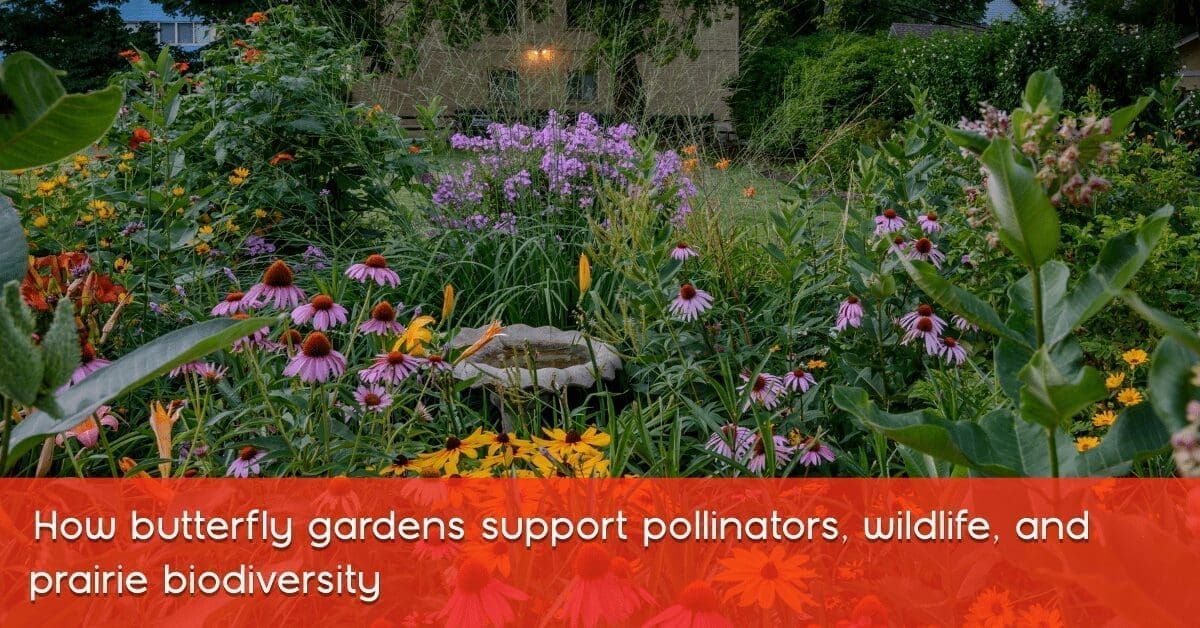
In my pollinator garden here in Lincoln, Nebraska, butterflies appear throughout the growing season. Monarchs glide through the milkweed patches in summer. Smaller butterflies move between coneflowers, bee balm, and other prairie flowers that bloom across the garden.
Over time I began to realize that a butterfly garden supports far more than butterflies alone. The same plants that attract butterflies also support bees, moths, birds, and many other forms of wildlife. A garden designed for butterflies can quickly become a thriving ecosystem.
What Makes a Butterfly Garden
A butterfly garden is designed to provide the plants and habitat features that butterflies need to survive. Two elements are especially important.
Nectar plants for adult butterflies
Adult butterflies feed on nectar from flowers. Gardens with abundant nectar plants provide the energy butterflies need for flight, reproduction, and migration.
Many prairie flowers are excellent nectar sources, including purple coneflowers (Echinacea purpurea), bee balm (Monarda fistulosa), prairie blazing star (Liatris pycnostachya), and black-eyed Susan (Rudbeckia hirta).
Host plants for caterpillars
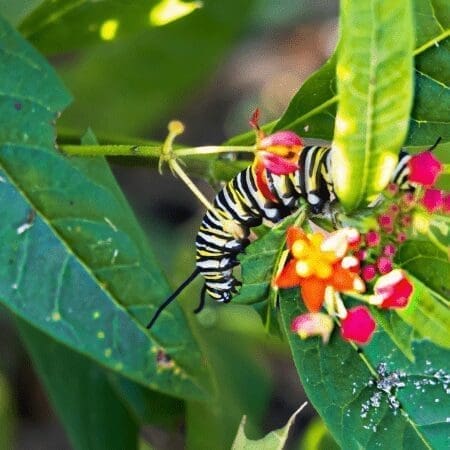
Butterflies also need host plants where they lay eggs and where caterpillars can feed after hatching. Each butterfly species relies on specific host plants. Monarch butterflies depend entirely on milkweed (Asclepias species). Without milkweed, monarch caterpillars cannot survive.
Because of this, planting host plants is one of the most important steps in creating butterfly habitat.
Purple Coneflower (Echinacea purpurea)
Milkweed (Asclepias species)
Monarch Butterflies in My Garden
Monarch butterflies are among the most familiar visitors to my garden.
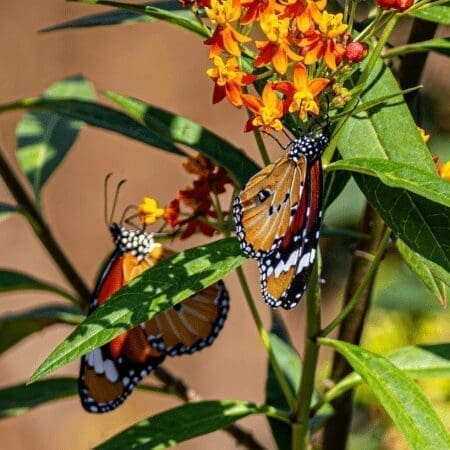
Milkweed plants (Asclepias species) grow in several areas, and during the summer months monarchs regularly appear to feed on nectar and search for places to lay eggs. Finding a monarch caterpillar on a milkweed leaf is always exciting. The small striped caterpillars slowly feed on the leaves as they grow through several stages before forming a chrysalis.
Watching that process unfold in the garden creates a direct connection to the monarch migration that stretches across North America. Because of the habitat created here, the garden has been recognized as a Monarch Waystation and also as a Certified Wildlife Habitat by the National Wildlife Federation and the Nebraska Wildlife Federation.
Those designations reflect something I see throughout the growing season. When the right plants are present, butterflies quickly respond.
Nectar Plants That Attract Butterflies
Several flowers in my garden attract butterflies consistently throughout the summer.
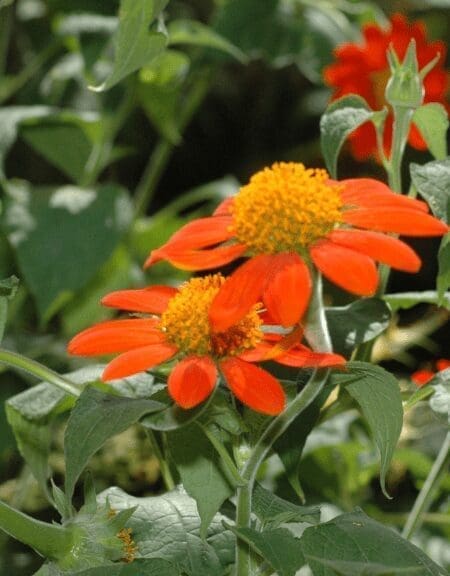
Mexican sunflower (Tithonia rotundifolia)
Mexican sunflower (Tithonia rotundifolia) has proven to be one of the most popular nectar plants in the garden. Although Mexican sunflower is not native to Nebraska, it has been a surprisingly beneficial addition. After researching plants that would complement prairie species, I chose it carefully to make sure it would work well alongside native plants and support the pollinators that rely on them.
The plant has adapted beautifully to the local conditions here and produces abundant nectar that attracts butterflies throughout the season.
Purple coneflowers provide nectar for many pollinators and become gathering points for butterflies during warm afternoons.
Bee balm attracts both butterflies and bees with its bright flowers and strong nectar production.
Prairie blazing star blooms later in the season and provides valuable nectar when many other flowers begin to fade.
Butterfly Gardens Support Entire Ecosystems
While butterflies are often the focus of these gardens, the habitat supports far more than a single group of insects. The same flowers that attract butterflies also feed bees and other pollinators. Birds visit the garden as well, especially when plants begin producing seeds later in the season.
Goldfinches frequently land on coneflowers and other seed heads, pulling seeds from the dried flowers in late summer and fall. Caterpillars that feed on host plants also become part of the broader food web. Many birds rely on caterpillars as an important food source during nesting season. In this way, butterfly gardens contribute to the health of entire ecosystems.