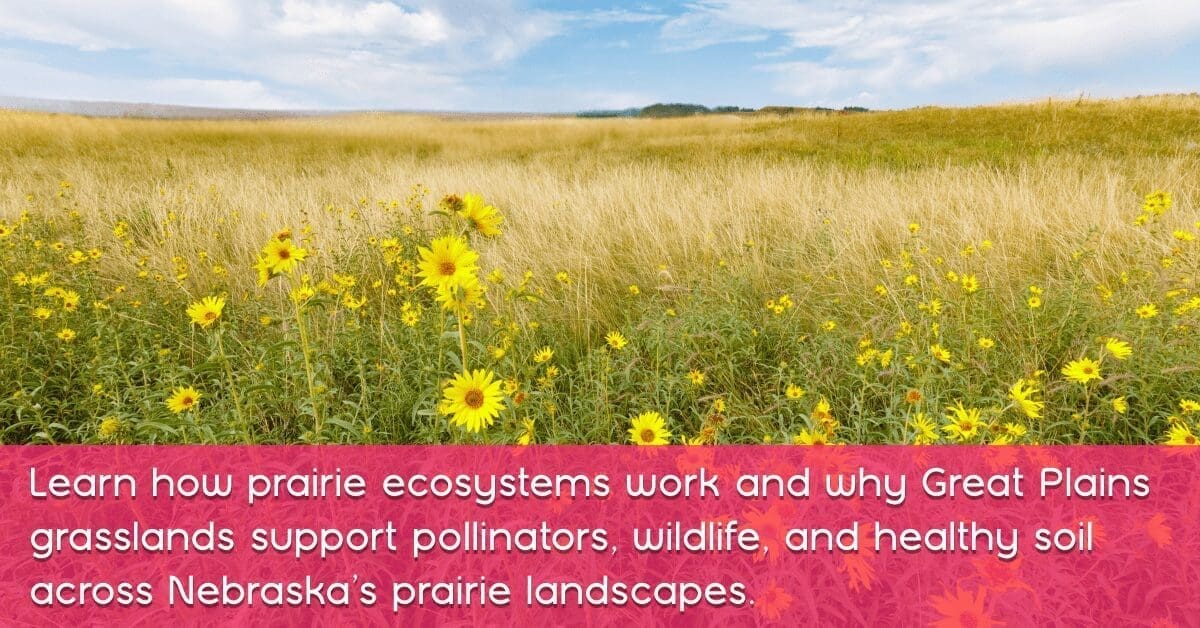
Living in Lincoln, Nebraska has given me many opportunities to observe prairie landscapes up close. Even within the city, prairie ecosystems are present in restoration areas, along trails, and within native gardens like the pollinator habitat near UNL East Campus. At first glance, a prairie might look simple. Tall grasses sway in the wind, and wildflowers bloom throughout the summer. But the prairie is actually a remarkably complex ecosystem where plants, insects, wildlife, soil, and climate interact in ways that have evolved over thousands of years.
Much of the prairie exists underground. Prairie ecosystems are shaped not only by what grows above the soil, but by deep root systems, soil organisms, and seasonal cycles that keep the landscape in balance. Tallgrass prairie once covered about 170 million acres across North America, stretching across much of the Midwest and Great Plains. Today, less than four percent of that original prairie remains, which makes understanding and protecting these ecosystems especially important. Spending time observing prairie habitats has helped me appreciate how many natural systems work together to sustain this landscape.
Prairie Plants and Grasses
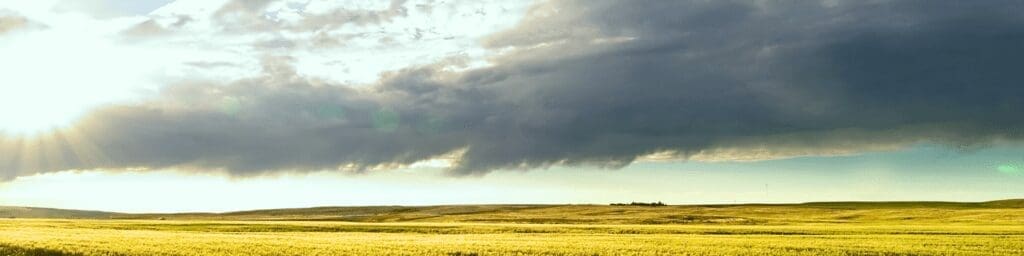
Prairie ecosystems are dominated by grasses and flowering plants that have adapted to the climate and soils of the Great Plains. Unlike forests, where trees define the landscape, prairies are shaped primarily by grasses. Some of the dominant prairie grasses found across Nebraska include:
- big bluestem (Andropogon gerardii)
- switchgrass (Panicum virgatum)
- Indian grass (Sorghastrum nutans)
These grasses can grow several feet tall during the summer, forming the sweeping prairie landscapes often associated with the Midwest. What makes prairie grasses especially remarkable is what happens below ground. Many prairie plants develop root systems that extend eight to fifteen feet deep into the soil. Those deep roots serve several important functions. They help plants survive drought conditions, stabilize soil and prevent erosion, store nutrients and energy, and support healthy soil ecosystems.
Over thousands of years, plant roots and decaying vegetation have helped create some of the most fertile soils in the world. Prairie soils are rich in organic matter because generations of plants have grown, died back, and decomposed in place. When I dig into my own garden beds here in Lincoln, I think about how prairie ecosystems build soil slowly over time through these natural cycles.
Pollinators and Wildlife
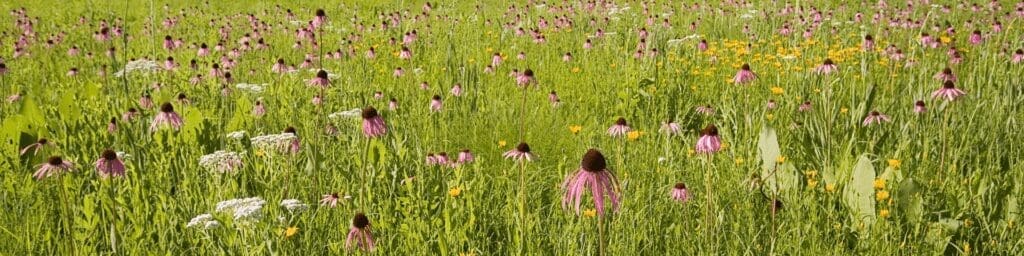
Prairie ecosystems support an incredible variety of insects, birds, and animals. One of the most visible parts of this ecosystem is the community of pollinators that depend on prairie flowers. North America is home to more than 4,000 species of native bees, many of which rely on prairie plants for nectar and pollen.
In my garden and in prairie spaces around Lincoln, I often see bees moving between flowers such as:
- purple coneflower (Echinacea purpurea)
- bee balm (Monarda fistulosa)
- black-eyed Susan (Rudbeckia hirta)
Butterflies are another important part of prairie ecosystems. Monarch butterflies (Danaus plexippus) depend entirely on milkweed plants (Asclepias spp.) to raise their caterpillars. Monarchs migrate through Nebraska each year on journeys that can span up to 3,000 miles.
Prairie habitats also support many birds and small mammals. Bird species rely heavily on insects found in prairie environments, especially during nesting season when young birds require protein-rich insect diets. Small mammals use prairie grasses for shelter, while birds such as American goldfinches (Spinus tristis) feed on seeds from flowers like coneflowers. Watching these interactions unfold makes it clear how interconnected prairie ecosystems really are.
Fire and Renewal
One of the most important forces shaping prairie ecosystems is fire.
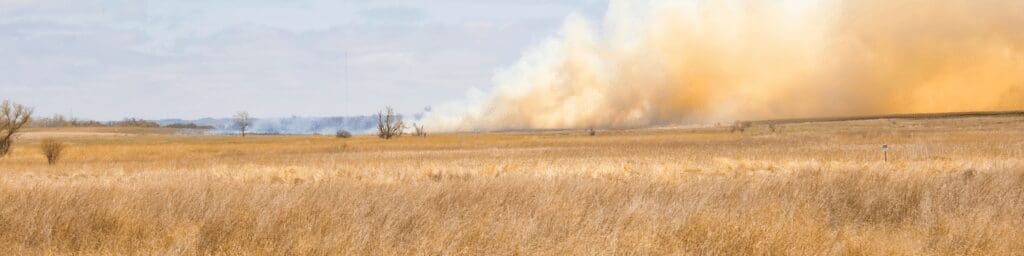
Natural prairie fires historically occurred through lightning strikes or were intentionally set by Indigenous peoples to manage grasslands. Although fire may seem destructive, it actually plays an important role in prairie health. Prairie plants evolved alongside fire, grazing animals, and seasonal climate cycles, which means many species depend on periodic fire to thrive.
Fire helps prairie ecosystems by clearing out dead plant material, returning nutrients to the soil, encouraging new plant growth, and most importantly, preventing trees from overtaking grasslands. Today, many prairie restoration projects use controlled burns to maintain healthy prairie habitats. Even though fires are rarely seen in urban areas like Lincoln, the prairie plants growing in gardens and restoration spaces still carry those same evolutionary adaptations. Each growing season reflects the renewal cycles that have shaped prairie ecosystems for centuries.

Why Prairie Ecosystems Matter Today
Prairie ecosystems play an important role in supporting biodiversity. Prairies can support hundreds of species of flowering plants, along with the insects and wildlife that depend on them. Unfortunately, prairie habitats have declined dramatically due to agriculture and urban development. Because of this, prairie conservation and restoration efforts have become increasingly important.
Across Nebraska and the Midwest, conservation groups, parks, and local communities are working to restore prairie habitats. Even small urban spaces can help support prairie biodiversity. Planting native species in gardens, community spaces, and parks can help reconnect fragmented prairie habitats and support pollinators moving through the landscape. Here in Lincoln, I have noticed more native prairie gardens appearing in neighborhoods and public spaces each year. Each one helps create another small piece of habitat within the urban prairie.
Prairie Ecosystems as Inspiration
Spending time observing prairie ecosystems has influenced many of the ideas behind Pixel Prairie Co. The colors and textures of prairie grasses, the patterns of wildflowers, and the quiet movement of pollinators all inspire different design elements.
Flowers such as purple coneflower (Echinacea purpurea) and prairie blazing star (Liatris pycnostachya) bring vibrant color to prairie landscapes. Prairie grasses such as big bluestem (Andropogon gerardii) add structure and movement. Watching these ecosystems change throughout the year reminds me that prairie landscapes are full of subtle patterns and rhythms that often appear in nature-inspired designs.